






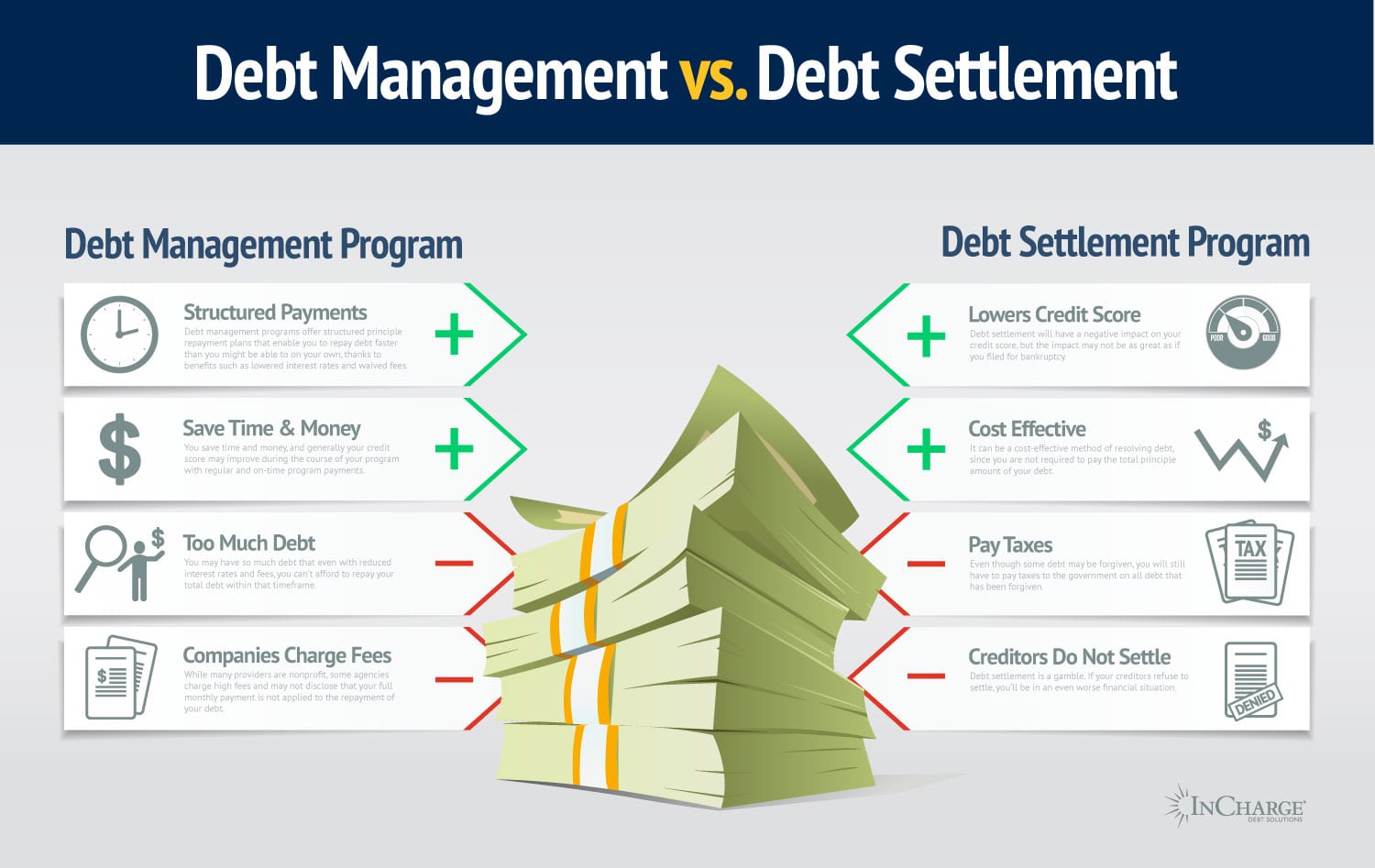
Debt Management vs Debt Settlement
Introduction:
When it comes to managing debt, there are multiple strategies available to individuals seeking relief. Two common approaches are debt management and debt settlement.
Understanding the differences between these options is crucial in determining the most suitable path for your financial circumstances.
In this in-depth article, we will compare and contrast debt management and debt settlement, exploring eligibility criteria, and potential impact on credit scores, and weighing the pros and cons of each option.
So, which one is right for you?
What is Debt Management?
Debt Management vs Debt Settlement
Debt management involves working with a credit counseling agency to create a structured repayment plan. Through this process, the agency negotiates with creditors to potentially secure lower interest rates, waived fees, or extended payment terms. Debt management is typically geared towards individuals with unsecured debts, such as credit cards or personal loans.
What is Debt Settlement?
Debt settlement, on the other hand, involves negotiating with creditors to pay off a portion of the total debt, typically through a lump sum payment or structured settlement.
This approach is often pursued when individuals are facing significant financial hardship and are unable to repay their debts in full.
Key Differences:
Debt Management vs Debt Settlement
Approach:
Debt management focuses on repaying the full amount of debt over time, while debt settlement aims to settle the debt for a reduced amount.
Eligibility:
Debt management programs are generally available to individuals with a stable income and the ability to make regular monthly payments.
Debt settlement is typically pursued by those experiencing severe financial hardship or individuals with a large sum of debt.
Creditor Relationships:
Debt management programs work in collaboration with creditors to establish revised repayment terms.
Debt settlement involves negotiating with creditors to reduce the overall debt amount, which can strain creditor relationships.
Potential Impact on Credit Scores:
Debt Management:
Participating in a debt management program may have a neutral or slightly positive impact on credit scores.
While enrolled, individuals may experience a temporary dip in their credit scores due to the closure of credit accounts.
However, consistent and timely payments can contribute to improving creditworthiness over time.
Debt Settlement:
Debt settlement can have a negative impact on credit scores.
Settling a debt for less than the full amount may result in a notation on the credit report indicating a partial payment or settlement.
This notation can stay on the credit report for up to seven years and may affect future credit applications.
Pros and Cons:
Debt Management vs Debt Settlement
Debt Management:
Pros:
- Structured repayment plan with affordable monthly payments.
- Potential for reduced interest rates and waived fees.
- Guidance and support from credit counseling agencies.
- Positive impact on credit scores in the long term.
Cons:
- Requires regular monthly payments over an extended period.
- Limited to unsecured debts.
- May involve closing credit accounts, affecting credit utilization ratios.
Debt Settlement:
Pros:
- Opportunity to settle debts for less than the full amount.
- Potential for faster resolution of debts.
- May offer significant relief for individuals facing financial hardship.
Cons:
- Adverse impact on credit scores.
- Potential tax implications for forgiven debt.
- Risk of creditor lawsuits during the negotiation process.
- Limited eligibility criteria and not suitable for everyone.
Conclusion:
Debt Management vs Debt Settlement
Choosing between debt management and debt settlement requires careful consideration of your financial situation, goals, and eligibility.
Debt management offers a structured repayment plan, potential interest rate reductions, and a positive impact on credit scores over time.
Debt settlement, on the other hand, focuses on reducing the overall debt amount but may have a negative impact on credit scores and involve risks and potential tax implications.
Evaluate your circumstances, consult with a financial professional, and weigh the pros and cons of each option.
Ultimately, the choice between debt management and debt settlement depends on your specific needs, financial capabilities, and long-term goals.
Remember, seeking professional advice can provide valuable insights and help you make an informed decision to regain control of your financial future.
Denisawa is a leading debt management provider in Kenya contact us today and let us hold your hand out of the financial mess you are in.